Getting Around Singapore Without a Car: A Guide for New Arrivals
Singapore is one of the few places where not owning a car is the obviously correct decision. What replaces it, what it costs, and the handful of things nobody tells you in your first week.
If you have just moved to Singapore, you may be quietly wondering when you should sort out a car. The answer, for the overwhelming majority of residents, is never.
Car ownership here requires a Certificate of Entitlement bought at auction, which alone costs more than a car does in most countries, before the car, the tax, the insurance, the fuel, the parking and the road pricing. Meanwhile the island is 50 kilometres across, the public transport network is genuinely excellent, and taxis are plentiful.
This guide covers what to do instead.
Week one: how to pay
Start here, because it takes five minutes and unlocks everything else.
You have two options. Tap a contactless Visa or Mastercard, or your phone — no card to buy, no top-ups, and it works from the moment you land. Or buy a stored-value transit card at a station ticket office, which shows your balance and fare at every tap and keeps transport spending separate from your bank account.
Fares are identical either way. Our EZ-Link vs SimplyGo comparison covers the trade-offs properly, but for your first week: just tap your bank card and sort out the details later.
One rule from day one: tap when you board and tap again when you alight. Both. On buses too. Forgetting to tap out charges you the maximum fare for the route.
The thing that will change how you plan trips
Singapore charges by distance travelled, not per vehicle boarded. Transfers within about 45 minutes are free.
If you come from a city where each bus costs another fare, this takes a while to internalise, and until it does you will make worse decisions. It means there is no reason to hunt for a direct bus. A trip using a bus, then a train, then another bus costs exactly the same as a single direct bus covering the same distance.
So: optimise for speed and comfort, never for fewest vehicles. Everything else in this guide follows from that.
The pieces of the network
MRT
Six lines and well over a hundred stations, running from around 5:30am until shortly after midnight. Fast, air-conditioned, unaffected by traffic, and the backbone of most journeys longer than a few kilometres. Our MRT line guide covers what each line is for.
Buses
Around 5,000 stops and comprehensive coverage — buses reach the places trains do not, which in practice means most residential streets. Slower than the train over long distances, often better over short and medium ones, and they get you closer to your actual destination.
Walking
Underrated here, with one significant caveat. Distances are short and the sheltered walkway network around housing estates and stations is extensive. The caveat is the weather: it is hot and humid year-round and it rains hard without much warning. A ten-minute walk at 2pm is a different proposition from the same walk at 8am.
Taxis and ride-hail
Plentiful and, by the standards of most developed cities, reasonable. Not something to use daily, but the right answer for late nights, heavy luggage and awkward cross-island trips.
Cycling
An expanding network of park connectors and cycling paths. Genuinely pleasant for leisure and workable for shorter commutes, though heat and rain make it a harder daily proposition than in temperate cities.
What it costs
Individual trips run from around a dollar for short hops to a little over two dollars for long cross-island journeys, by card. Monthly travel passes exist, and whether one saves you money is arithmetic worth doing once — multiply your typical daily fare by your commuting days and compare.
The comparison that matters: a full month of daily public transport commuting costs a small fraction of what a car costs in a single month here, before you have driven anywhere. That gap is the entire argument.
See our fares guide for the mechanism, and the LTA Fare Calculator for exact figures on a specific trip.
Six things nobody tells you in your first week
- No eating or drinking on trains and buses. This is enforced and includes water. Finish your coffee before you tap in.
- Durian is explicitly banned. There is a sign. It is not a joke.
- Let people off before boarding, and queue. Queuing is taken seriously and standing to the side of the doors is the norm.
- Priority seats are respected. Sitting in one is fine; not offering it up when someone needs it is not.
- Keep left on escalators so people can walk past on the right.
- Everything is very cold indoors. Trains, buses, malls and offices are aggressively air-conditioned while it is 32°C outside. Carrying a light layer is normal.
Tools worth setting up
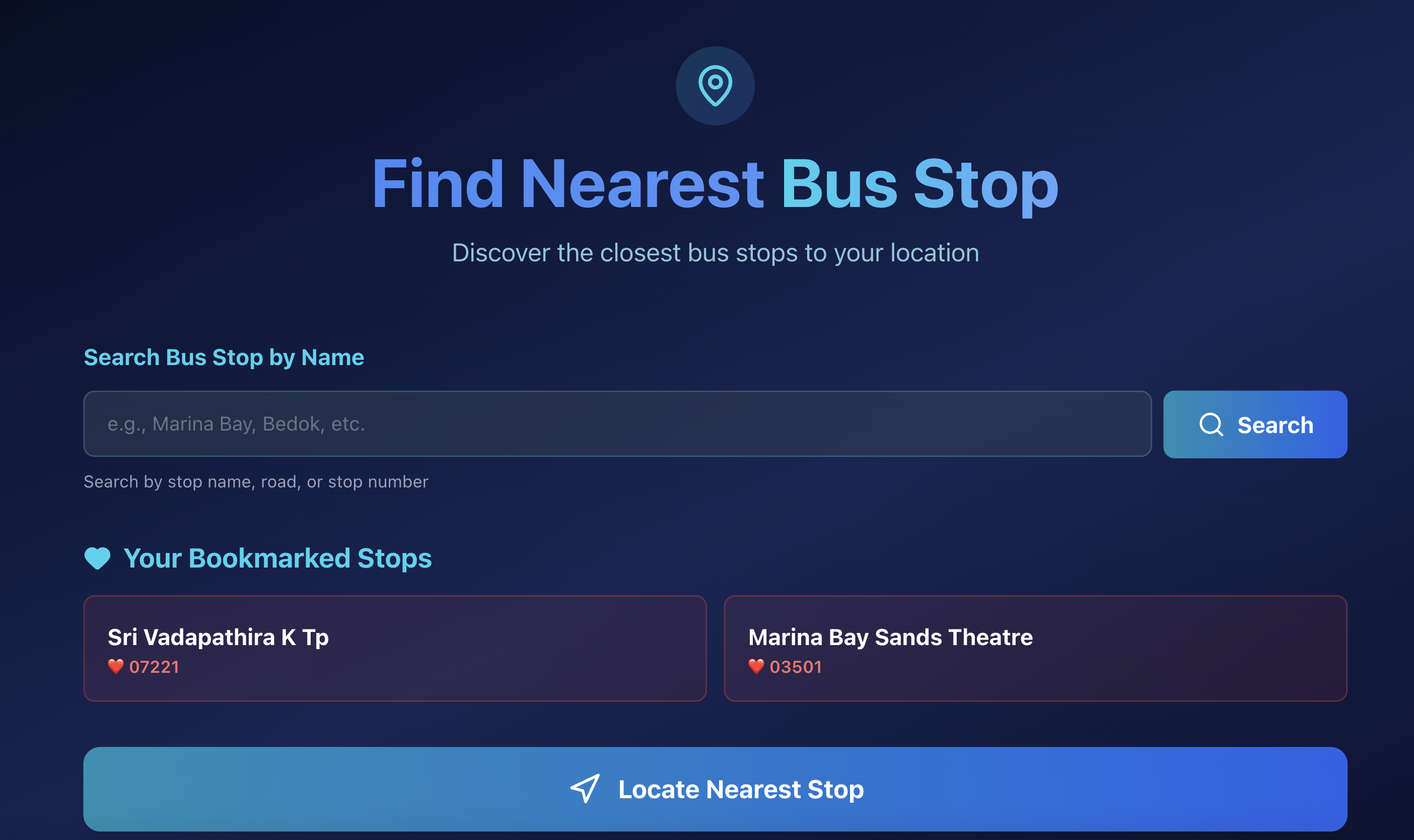
- A live arrival tool. Knowing when your bus is actually coming is the difference between waiting indoors and waiting in the sun. SmartCommute works in the browser with no download and no account, and you can bookmark the stops you use daily.
- A journey planner for working out unfamiliar routes end to end.
- A ride-hail app as a fallback.
- Your transit card's app if you use a stored-value card, for topping up and checking history.
Your first month, in order
- Week one: tap your bank card and go. Do not overthink the payment decision.
- Week two: work out your commute properly. Find your nearest stops, identify the services that serve them, and bookmark them.
- Week three: find one alternative route to work. You will need it eventually.
- Week four: decide whether a stored-value card or monthly pass suits you better, now that you know your actual travel pattern rather than a guess at it.
The mindset shift
The thing that takes longest to adjust to is not any specific rule — it is trusting the network enough to stop planning around a car you do not have. Once you accept that transfers are free, that a train will be along in three minutes, and that a taxi exists for the handful of trips that do not fit, the whole question of car ownership stops being interesting.
Start with the basics: find your nearest bus stop and check live arrivals, then look up the services that serve it on the route finder.